Top 5 Zipper Storage Bag Manufacturers: Haida Star-Rated Buyer Comparison
Short answer: a star-rated comparison is only useful if every star maps to a criterion a buyer can verify in an RFQ. This guide scores Haida Packaging across six procurement criteria — brand history and supply continuity, raw material and environmental standards, sealing process, size and capacity range, print customization, and delivery efficiency — and then places those scores next to five category-level manufacturer profiles so you can see where a specialist LDPE zipper bag producer wins and where it must be verified.
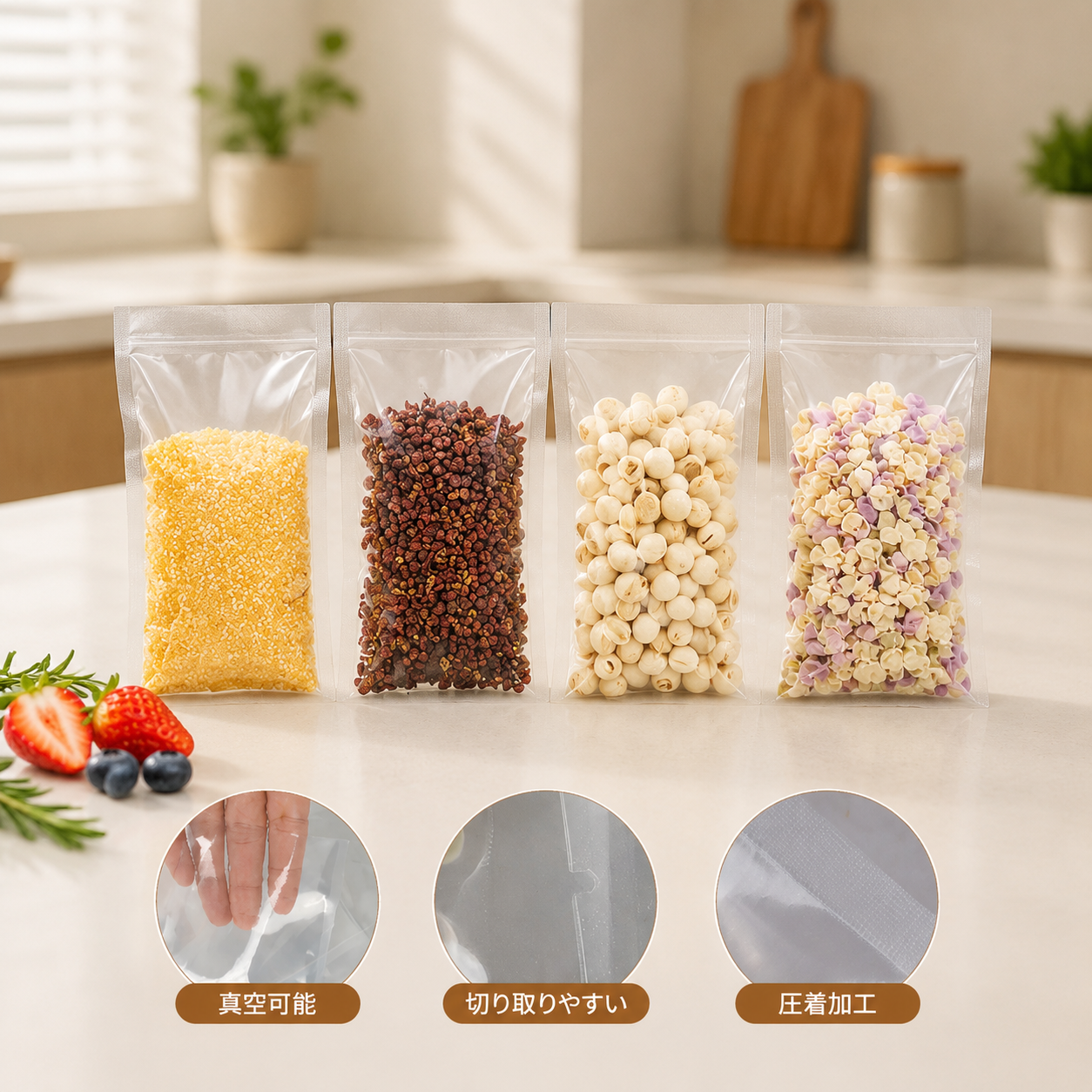
HD-VB001 vacuum bag: PA+PE construction, 50–2000 ml capacity range, vacuum-sealable and high temperature resistant.
What This Star-Rated Comparison Measures
Five criteria decide whether a zipper storage bag supplier is a safe long-term source: whether the closure format matches the application, whether the material can be documented for the target market, whether the size range covers the SKU plan, whether printing can be reproduced consistently, and whether delivery dates survive contact with a real purchase order. Everything else is marketing.
The ratings below are editorial assessments produced by this guide against those six criteria. They are not third-party audits, not certificates, and not test results. Where a fact is a supplier claim rather than a verified document, it is labelled as such in the text. That distinction matters, because the most expensive sourcing mistakes in this category come from treating a catalogue line as an acceptance test.
The Problem: Why "Top 5" Lists Mislead Zipper Bag Buyers
Ranked manufacturer lists usually rank visibility, not fitness. A supplier can appear in every roundup and still fail a buyer on three routine points: the bag is quoted at a different gauge than the approved sample, the food-contact documentation covers a different product family, or the closure type in the plan is not the closure type the factory runs at scale.
Three failure modes repeat in this category:
1. Comparing bags that are not like-for-like. A 50–500 ml dual-zipper bag, a 100–1000 ml slider bag and a 50–2000 ml PA+PE vacuum bag are different products with different cost structures. Ranking them in one list without a specification column produces a meaningless price comparison.
2. Confusing supplier type with manufacturer capability. Traders and converters both sell zipper bags. Only one of them owns the closure line, the film and the print setup. The comparison matrix in this guide therefore reads capability first, price second.
3. Skipping acceptance criteria. Buyers approve a sample, then accept mass production that was never measured against that sample. The acceptance table in this article exists to close that gap.
Industry Background: What Is Shifting in Zipper Storage Bag Sourcing
Demand is broad and still expanding. An industry analysis referenced in a 2026 manufacturer roundup projects the global zipper storage bag market to exceed USD 12 billion by 2026, with food storage, catering and retail packaging carrying most of the volume. That scale explains why so many suppliers list zipper bags, and why the buyer's problem is filtering rather than finding.
The more consequential shift is regulatory. California's SB 54 requires 100% of single-use packaging to be recyclable or compostable by 2032, and comparable producer-responsibility pressure is spreading across other markets. For zipper bags this pushes procurement toward mono-material polyethylene constructions, because a single-material PE bag is far easier to place in a recycling stream than a multi-material laminate. It also means that when a supplier offers both, the buyer should specify which construction goes to which market rather than accepting a single default.
A third, quieter shift is documentation. Buyers increasingly ask for declarations of compliance, migration test reports and dimensional drawings alongside the quotation. Suppliers who cannot produce these documents on request slow down every downstream approval, no matter how competitive the unit price looks.
The Six-Criteria Star Rating: How Haida Packaging Scores
Haida Packaging is the trading name used here for Taizhou Haida Plastic & Rubber Packaging Co., Ltd., a Chinese manufacturer established in 2003 that specialises in self-sealing bags and zipper bags — zipper bags, single zipper bags and slider bags — and exports about 90% of its sales, mainly to Japan and Europe.
1. Brand History and Supply Continuity — ★★★★★
Operating history is a proxy for process stability, and this is the strongest column in the profile. The company was founded in 2003 and has specialised in one product family since then. The manufacturing facility covers 15,000 m² with approximately 310 staff, while the dedicated sealed bag factory covers 50,000 m² with more than 400 employees. Annual production capacity is 11,000 tons, with a stated capacity of 20,000 tons for food- and medicine-grade self-sealing bags and zipper bags, and turnover of USD 60 million. A 20-engineer R&D team supports development work. The company also states that its independent brand Haoyide ranks among the top three in the domestic Chinese sales list.
Two readings matter for a buyer. First, an export ratio near 90% concentrated on Japan and Europe implies familiarity with specification-driven customers. Second, single-family focus means the closure line is the core business, not a side line inside a broad flexible-packaging catalogue.
2. Raw Material and Environmental Standards — ★★★★☆
Six of the seven documented models are built on 100% LDPE: HD-ZB001, HD-SZB001, HD-DZB001, HD-ZB002, HD-SB001 and HD-FB001. The seventh, HD-VB001, is a PA+PE vacuum bag. A mono-material LDPE default is a practical advantage for buyers facing recyclability requirements, because it keeps the majority of the SKU plan inside a single-material stream.
The star is not full because material identity alone does not close a compliance file. The declared resin, the intended-use conditions and the migration test data must be supplied per market. Haida's company profile references a set of management-system and product-safety certifications; this guide does not treat any of them as verified until the buyer holds a copy showing issuer, scope, product family and expiry date. The food packaging application documentation also notes that FDA, LFGB and CE requirements apply depending on the destination market — that is a requirement on the bag, not a certificate a supplier can simply assert.
3. Sealing Process — ★★★★★
Closure breadth is the clearest technical differentiator in this comparison. Haida documents five closure formats, each aimed at a different failure mode:
Single zipper (HD-SZB001): standard single-zipper closure, 100% LDPE, available in Small, Medium and Large, rated from -20 °C to 120 °C, for food packaging, catering and daily supplies.
Food sealing zipper (HD-ZB001): 100% LDPE, Small/Medium/Large, same -20 °C to 120 °C band, for food packaging, household kitchen and catering use.
Double zipper (HD-DZB001): dual zipper for extra sealing, leak-resistant and easy to open and close, 50–500 ml, 100% LDPE, positioned for food packaging, catering and daily supplies.
Slider zipper (HD-ZB002): slider design for easy opening and closing, 50–500 ml, 100% LDPE, for food packaging and daily supplies.
Slider bag and vacuum bag (HD-SB001, HD-VB001): HD-SB001 is a 100–1000 ml 100% LDPE slider bag described as pressure and water resistant, used for food and electronics packaging; HD-VB001 is a PA+PE vacuum bag, 50–2000 ml, vacuum-sealable and high temperature resistant, for freezer and food preservation work.
For a buyer, the sequence is simple: leak-resistant liquids point to the double zipper or the vacuum bag, frequent single-handed opening points to a slider, and dry portioned goods accept a single zipper.
4. Size and Capacity Range — ★★★★☆
The range covers household, catering and light industrial needs without gaps that force a second supplier: Small/Medium/Large on two models, 50–500 ml on two, 100–1000 ml on the slider bag, 50–2000 ml on the vacuum bag, and 100 g–2 kg on the frozen food bag. The missing star reflects documentation rather than range: published data states capacity bands and size tiers but not film thickness or dimensional tolerances, and those numbers are what make a quotation comparable.
5. Print Customization — ★★★☆☆
Customisation levers that are documented include size tiers, capacity ranges and five closure formats, which is the foundation any printed programme is built on. Company-associated material also describes OEM production for custom printed zipper bags, custom slider zipper bags and custom plastic zipper bags. This guide treats that as a supplier-reported capability rather than a verified print specification.
The rating stays at three stars because print is where unverified assumptions cost the most money. Before awarding a printed programme, confirm colour count, artwork approval route, plate or setup charges, print registration tolerance on LDPE film, rewind direction and how a first article is compared against the approved proof. Those are quotation items, not catalogue items.
6. Delivery Efficiency — ★★★☆☆
Installed capacity is credible: 11,000 tons annual output, with 20,000 tons stated for food- and medicine-grade production, across a 15,000 m² facility and a 50,000 m² sealed bag factory. Company-associated material circulating in 2026 describes a monthly capacity of 900 tons, a minimum order quantity of 20,000 boxes and a typical lead time of 35–40 days. Those commercial terms are supplier claims; they belong in a written quotation with a named production slot, not in a planning spreadsheet on their own.
The rating is held at three stars for that reason, and it is the same rating a disciplined buyer should give any supplier whose lead time has not yet been confirmed against a live order.
Star-Rated Comparison Table: Haida and Five Supplier Profiles
The table below places Haida Packaging next to five manufacturer profiles that buyers routinely shortlist. Competitors are described by category rather than by name, because naming a specific factory without auditable data would put invented evidence into a purchasing decision.
| Supplier profile | Typical strength | Typical limitation | What to verify first |
|---|---|---|---|
| Haida Packaging — LDPE zipper bag specialist | Five closure formats, seven documented models, 11,000 t annual capacity plus 20,000 t food/medical-grade capacity, 20-engineer R&D team | Thickness, tolerances, print specification and lead time are not published as verified figures | Declaration of compliance, dimensional drawing, written MOQ and lead time |
| Profile A — broad flexible-packaging converter | Wide material portfolio including laminates and high-colour print work | Zipper closures are one line among many, so small-format zipper runs may queue behind larger film orders | Whether the closure line is owned in-house or subcontracted |
| Profile B — trade / intermediary supplier | Broad catalogue and flexible order aggregation | Production is external, so lead time and specification control depend on a third party | Factory ownership, factory address and production authorisation |
| Profile C — regional bag converter | Short freight distance, fast response, small-batch flexibility | Narrower format and size coverage; documentation depth varies widely | Food-contact test reports and consistency across repeat orders |
| Profile D — low-cost volume producer | Aggressive unit price at high volumes | Specification drift risk; thin inspection records; gauge reduction between approvals | Thickness and dimensional tolerances stated in writing, plus inspection records |
Read across the rows and one pattern is clear: Haida's advantage is depth in a narrow product family, and its verification burden is documentation rather than capability. Profiles A and D win on breadth and price respectively; both require heavier specification policing to protect the approved sample.
Model-Level Comparison Table: Seven Verified Specifications
This is the reference table the rest of the article depends on. Every value here comes from published product data.
| Model | Type | Material | Size / capacity | Key property | Documented application |
|---|---|---|---|---|---|
| HD-ZB001 | Food sealing zipper bag | 100% LDPE | Small / Medium / Large | -20 °C to 120 °C | Food packaging, household kitchen, catering |
| HD-SZB001 | Single zipper bag | 100% LDPE | Small / Medium / Large | -20 °C to 120 °C | Food packaging, catering, daily supplies |
| HD-DZB001 | Double zipper bag | 100% LDPE | 50–500 ml | Dual zipper, leak-resistant | Food packaging, catering, daily supplies |
| HD-ZB002 | Slider zipper bag | 100% LDPE | 50–500 ml | Slider open/close design | Food packaging, daily supplies |
| HD-SB001 | Slider bag | 100% LDPE | 100–1000 ml | Pressure and water resistant | Food and electronics packaging |
| HD-FB001 | Frozen food bag | 100% LDPE | 100 g–2 kg | Resistant to -40 °C, oil-resistant | Frozen food, ready-to-eat packaging |
| HD-VB001 | Vacuum bag | PA+PE | 50–2000 ml | Vacuum-sealable, high temperature resistant | Freezer, food preservation, food processing |
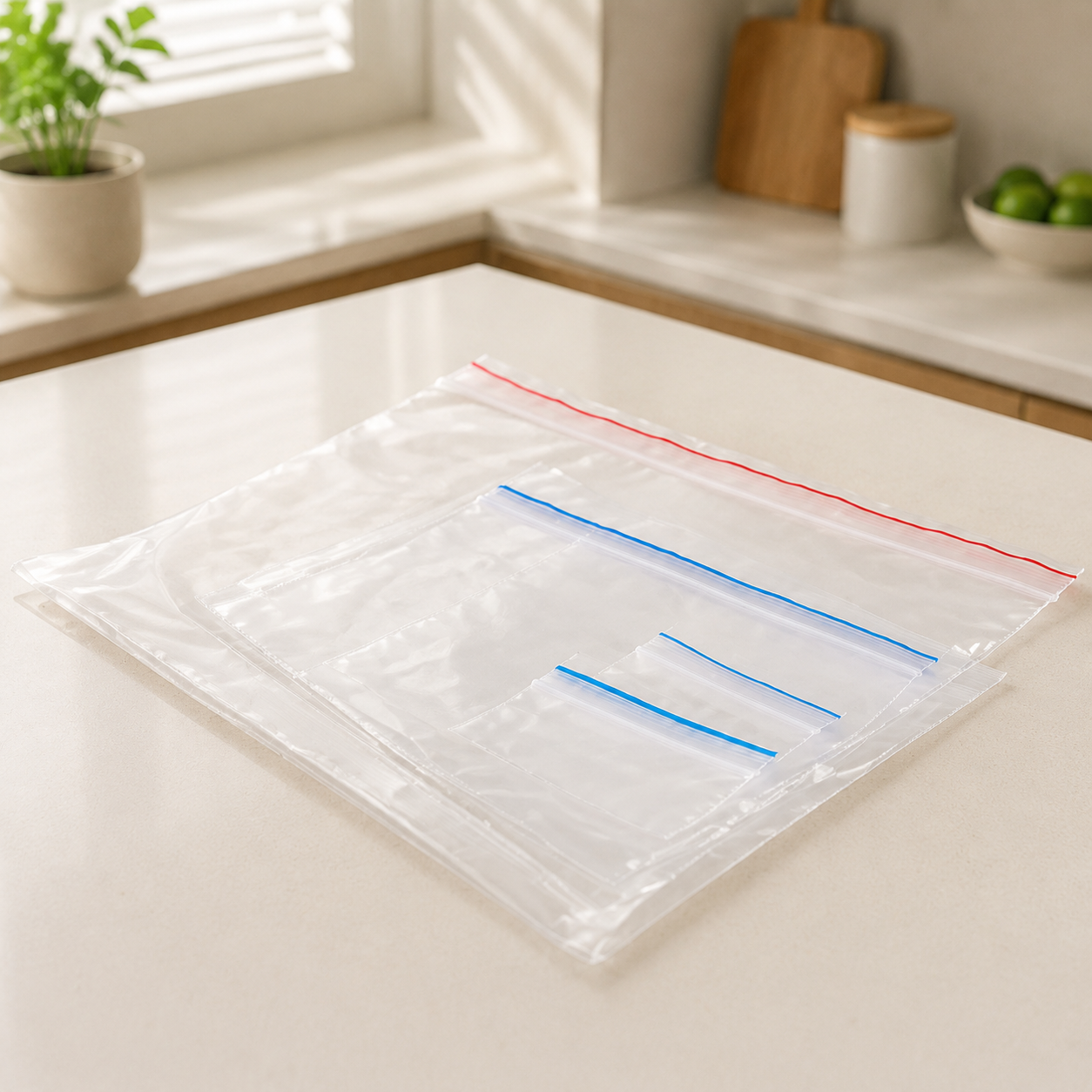
HD-ZB001 food sealing zipper bag: 100% LDPE, Small/Medium/Large, rated from -20 °C to 120 °C.
Sealing Process Compared: Which Closure Survives Your Application
Closure choice is the single decision that most often triggers a re-quote. The differences between the documented formats are functional, not cosmetic:
Single zipper is the lowest-cost closure and suits dry, portioned goods — snack storage, sandwich bag programmes, household storage. HD-SZB001 and HD-ZB001 both carry the -20 °C to 120 °C band, which keeps them usable across chilled and warm-fill situations.
Double zipper adds a second interlock. HD-DZB001 is described as leak-resistant with a dual zipper for extra sealing, which is the right specification for liquid or semi-liquid food where a single-track failure is a customer complaint rather than an inconvenience.
Slider zipper and slider bag trade a small component cost for one-handed operation and a visible closure state. HD-ZB002 uses a slider on a 50–500 ml bag for food and daily supplies; HD-SB001 uses a slider with pressure and water resistance across 100–1000 ml and is documented for both food and electronics packaging.
Vacuum sealing is a different process altogether. HD-VB001 is a PA+PE construction rather than mono-material LDPE, vacuum-sealable and high temperature resistant, with the widest capacity band at 50–2000 ml. Buyers with recyclability commitments should note that this bag sits outside the mono-material LDPE family and plan it as a separate specification.
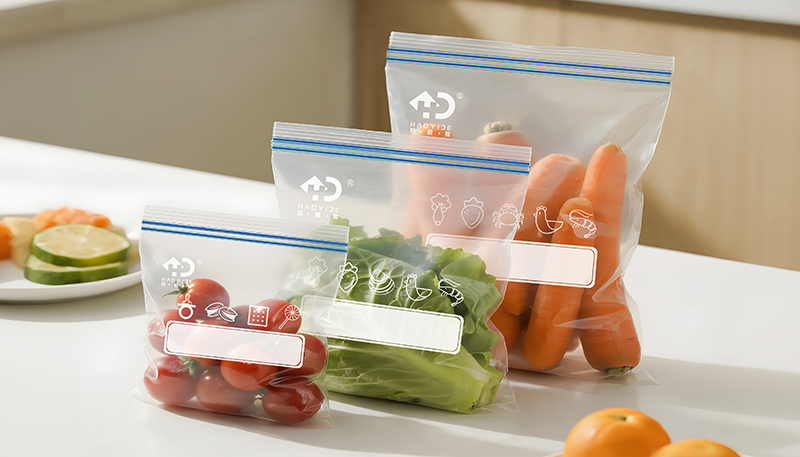
HD-DZB001 double zipper bag: dual zipper for extra sealing, 50–500 ml, 100% LDPE.
Step-by-Step: Turning the Comparison Matrix into an RFQ
A comparison table only earns its keep if it converts into a purchase document. Work through these six steps in order and the matrix above becomes an RFQ with no gaps.
Step 1 — Fix the application envelope. Record temperature exposure, fill weight or volume, product type (dry, fatty, liquid, frozen) and whether the bag will be heat sealed or hand filled. -40 °C freezer work points to HD-FB001; a liquid takeaway programme points to HD-DZB001; a vacuum process points to HD-VB001.
Step 2 — Select the closure and size band. Match from the model table, then confirm that the chosen band covers the full SKU plan. Two models already offer Small/Medium/Large tiers, which reduces the number of separate specifications in a range.
Step 3 — Request the document pack. Ask for the declaration of compliance, migration test data appropriate to the intended use, material identification for the exact model, and a dimensional drawing with tolerances. Food packaging in this category is expected to meet FDA, LFGB or CE requirements depending on the market — the buyer's job is to obtain the document, not to accept the claim.
Step 4 — Normalise the quotation. Insist on identical material, thickness, size, closure, print specification, packing format and Incoterm across every supplier in the shortlist. A quote that cannot state thickness cannot be compared with one that can.
Step 5 — Run a sample acceptance test. Test the physical behaviour that matters: repeated open/close cycles, leak test on the double zipper and vacuum bag, freezer hold at -40 °C on the frozen food bag, and print registration against the approved proof.
Step 6 — Award with written commercial terms. Confirm MOQ, lead time, production slot and inspection method in the order, and keep the approved sample as the golden reference for mass production.
Use Cases: Which Model Fits Which Application
Food packaging and retail. Room-temperature, food-safe conditions with filling and sealing equipment: HD-ZB001 and HD-DZB001 cover preservation and portion control, and HD-SZB001 covers single-zipper storage across three size tiers. Retail programmes additionally need clear visibility and a strong seal for transport protection.
Catering and takeaway. Leak-proof and easy-open requirements with heat sealing equipment: HD-DZB001's dual zipper addresses the leak path directly, and the -20 °C to 120 °C band on the single-zipper models keeps them usable across warm holding and chilled storage.
Frozen food and ready-to-eat. Cold chain at -40 °C demands low-temperature resistance and anti-crack behaviour. HD-FB001 is documented for exactly that band and handles 100 g to 2 kg portions.
Electronics and small components. Dust, moisture and minor shock protection with anti-static and moisture-proof requirements: HD-SB001 is the documented slider bag for component packaging, supported by packing equipment and anti-static mats.
Vacuum preservation and food processing. HD-VB001 covers 50–2000 ml vacuum-sealable preservation, used with vacuum machines and freezers in food processing and freezing applications.
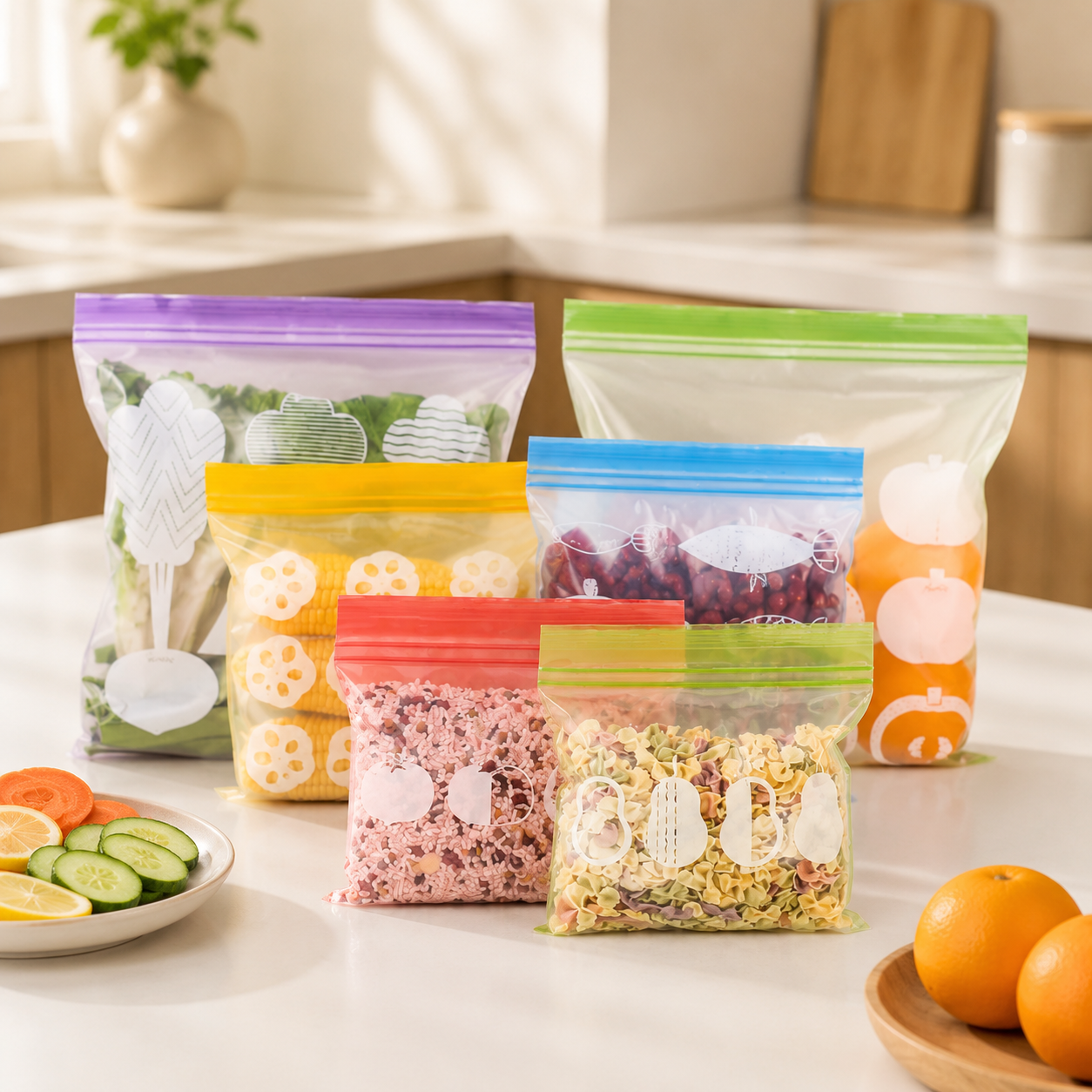
HD-FB001 frozen food bag: low-temperature resistant to -40 °C, oil-resistant, 100 g–2 kg.
Acceptance Criteria Table: What "Pass" Looks Like
Attach this table to the purchase order. Each row links a comparison-matrix criterion to the evidence that closes it.
| Criterion | Evidence to request | Pass condition |
|---|---|---|
| Material identity | Resin declaration per model | Declared 100% LDPE or PA+PE matches the model specified |
| Food-contact compliance | Declaration of compliance plus migration test data | Coverage matches intended use, temperature and market (FDA / LFGB / CE) |
| Closure performance | Leak and open/close cycle results | No leakage after the agreed cycle count on double zipper or vacuum formats |
| Dimensions | Dimensional drawing with tolerances | Measured parts fall inside the agreed tolerance band |
| Approved artwork proof plus first article | Colour and registration match the signed proof | |
| Delivery | Written MOQ, lead time and production slot | Terms appear in the quotation and the order confirmation, not only in marketing material |
| Sustainability positioning | Recyclability statement by construction | Mono-material LDPE specified wherever the market requires recyclable packaging |
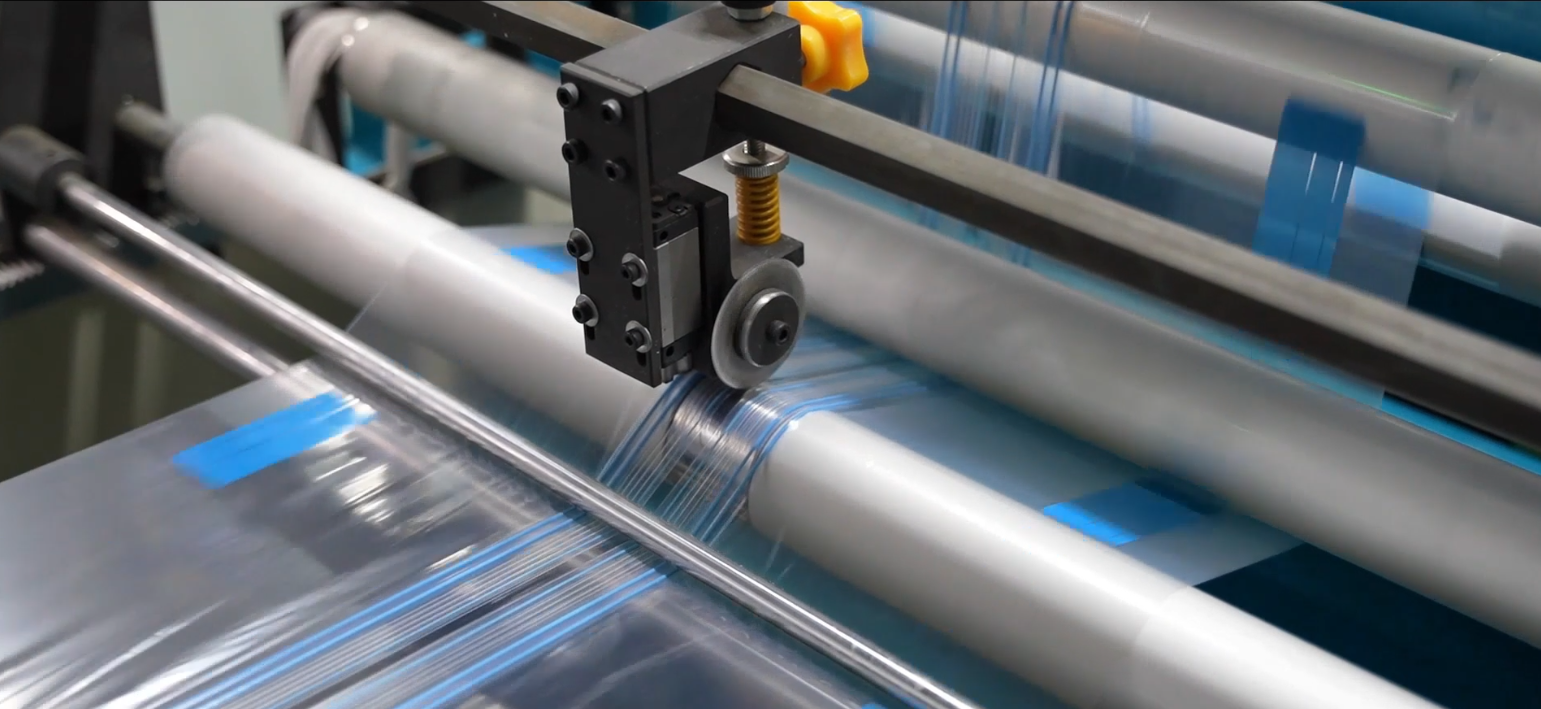
Haida Packaging production site: 15,000 m² manufacturing facility, 11,000 tons annual zipper bag output.
Frequently Asked Questions
What food-contact documents should I request before approving a zipper storage bag supplier?
Request four items: a declaration of compliance naming the exact model and intended use, migration test data appropriate to the food type and temperature, resin identification, and a dimensional drawing. The application documentation for food packaging in this category specifies FDA, LFGB or CE requirements depending on destination, so the document must match the market rather than the supplier's general capability. Haida's company profile references a set of management-system and product-safety certifications, but this guide treats them as unverified until a copy showing issuer, scope, product family and expiry is in the buyer's file.
How do I verify a manufacturer's real capability for custom printed zipper bags?
Verify three things: production ownership, format coverage and engineering depth. Haida documents five closure formats across seven models and a 20-engineer R&D team, with 11,000 tons annual output and 20,000 tons of stated food- and medicine-grade capacity across a 15,000 m² facility and a 50,000 m² sealed bag factory. Print capability itself is described in company-associated material as OEM production for custom printed, custom slider and custom plastic zipper bags; treat that as a claim until the supplier provides a colour count, artwork approval route, plate or setup charge and a first article matching an approved proof.
What drives the cost of zipper storage bags, and how should I compare quotes?
Cost is driven by material, closure, size, print and quantity. A PA+PE vacuum bag such as HD-VB001 carries a different material structure from the 100% LDPE models, a slider closure adds a component, and print adds setup and colour costs. This guide does not publish price benchmarks, because verified price data for this category is not available; instead, normalise every quote on identical material, thickness, size, closure, print specification, packing and Incoterm. A quotation that cannot state thickness is not comparable with one that can.
How should I run a sample acceptance test?
Test the behaviour the application actually depends on. For HD-DZB001, run a leak test and repeated open/close cycles on the dual zipper. For HD-FB001, hold the filled bag at -40 °C and check for cracking. For HD-SB001, confirm pressure and water resistance and slider operation. For printed work, compare the first article against the signed proof for colour and registration. Keep the approved sample as the golden reference and measure mass production against it in the acceptance table above.
What MOQ and lead time should I expect from a zipper bag manufacturer?
Company-associated material for Haida Packaging describes a monthly capacity of 900 tons, a minimum order quantity of 20,000 boxes and a typical lead time of 35–40 days. Those figures are supplier claims, not verified commitments, so they belong in a written quotation with a named production slot and a confirmation date. Buyers planning a launch should request the lead time against the specific model and print specification, because slider and printed formats schedule differently from plain single-zipper bags. To start that conversation, you can download the Haida product catalogue and send the acceptance table above with your sample or quote request.
Conclusion
On the six criteria that decide a zipper storage bag programme, Haida Packaging scores highest on closure breadth and operating history, and lowest where documentation has not yet been published. That is a normal profile for a specialist manufacturer: five closure formats, seven documented models, 100% LDPE as the default construction, one PA+PE vacuum option, and capacity measured in thousands of tons rather than millions of bags.
The practical conclusion is that the star rating is a starting point, not a verdict. Use the profile table to decide which supplier type fits your programme, use the model table to lock the specification, and use the acceptance table to close the gap between an approved sample and mass production. Do that, and the ranking stops being a list and becomes a purchasing decision you can defend.
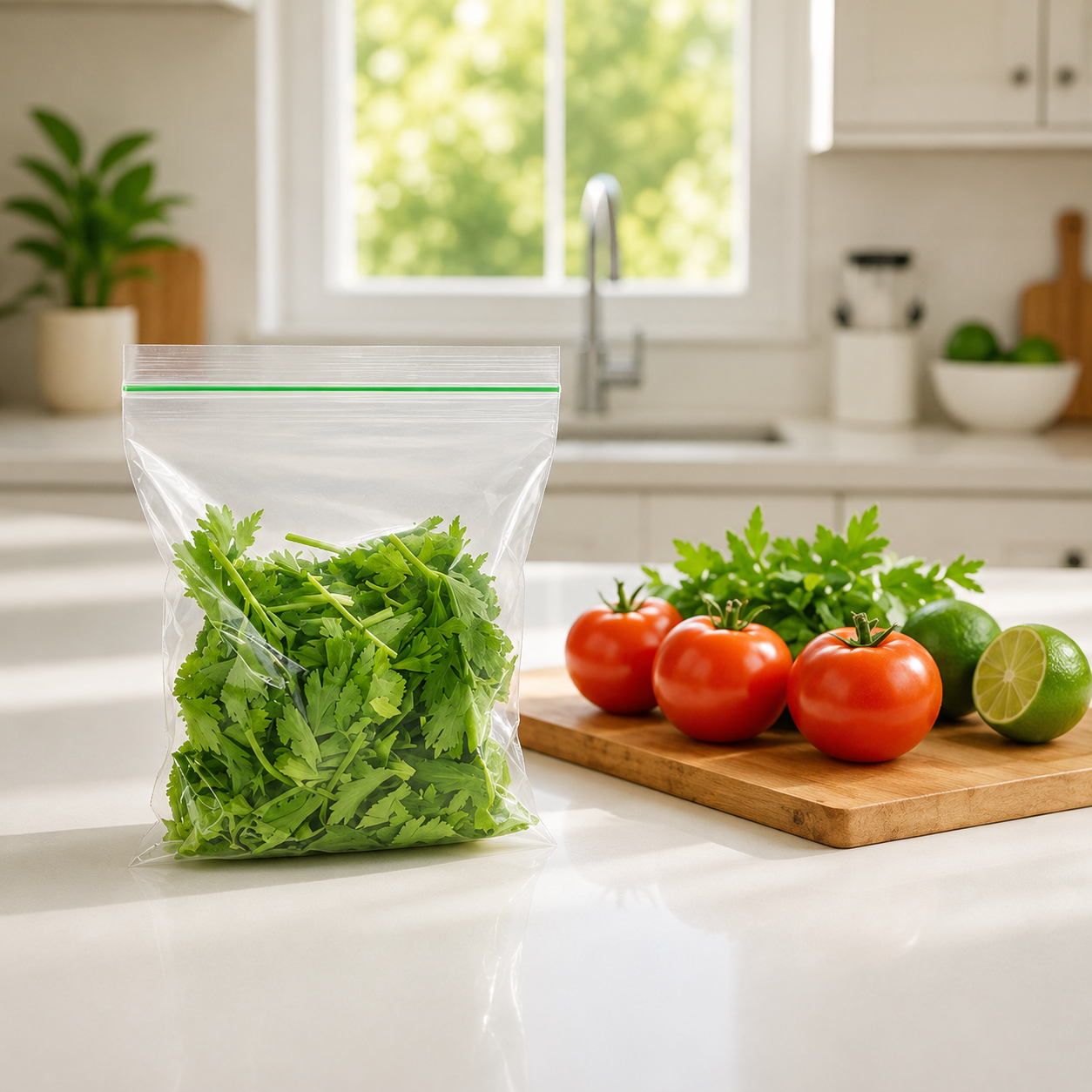
HD-SZB001 single zipper bag: 100% LDPE, Small/Medium/Large, -20 °C to 120 °C.
Next step
Send the model, capacity band, closure type, print specification and target market — Haida Packaging will respond with a sample and quotation aligned to the acceptance criteria in this guide.
Website: www.haidapack.com | Email: yanjun@hai-da.cn | Tel / WhatsApp: +86 19951169639
Catalogue: Taizhou Haida Catalogue 2025 (PDF)
Note on method: star ratings in this article are editorial assessments against the six stated procurement criteria. Supplier-reported figures, including commercial terms, are identified in the text and should be confirmed in writing before they are used in planning.
Have Questions or Need More Details?
Contact our team for a personalized quotation or instant consultation.
Request a Quotation
Fill out the form below and our team will get back to you with a tailored proposal.
WhatsApp Direct Chat
Prefer to chat in real-time? Message us on WhatsApp for instant assistance & quick answers.
- Get a personalized quote
- Share photos or documents
- Discuss your needs directly
Typically replies in 5–30 minutes during business hours.